Wednesday, February 27, 2008

Relationship Between Artist and Writer


This past week in my senior seminar class we had an art professor come and speak about an art project he had recently completed. My professor hoped that my classmates, fellow writing concentrations, and I would consider the similarities between the life of an artist and the life of an author. I will admit that when I first discovered that this artist was coming to speak in our seminar I thought it quite odd. Why invite an artist as a guest speaker? Couldn’t my classmates and I gain more if we were to have a writer come in as a guest speaker? Naïve was I to the realization that artists and writers likely have more similarities in relation to their careers than they do differences. We share the commonality of the creative mind, and face the same challenges as we go about our creative art. In my attempt to draw further connects between art and literature/writing I decided to delve into the work of formalist artists.

In his article titled, Classicist, Animist, Formalist, Iconoclast, author Steve Durbin draws and explains the diagram, located at the top left hand side of this page. The diagram is Durbin’s attempt to outline artistic approaches. Durbin suggests that depending on where one falls on the two axes in regards to favoring tradition vs. revolution and with consideration given more to art or life, one can be classified as a classicist, animist, formalist, or iconoclast. The diagram projects the formalist as one who strongly upholds both art and revolution, or that which is new over tradition.

In class on Tuesday there seemed to be a great deal of confusion in response to the essay coauthored by Wimsatt and Beardsley. Perhaps in most elementary terms it can be suggested that the formalist critic most strongly upholds writing and revolution. The formalist critic consciously aims not to bring personal experience, or foreknowledge in relation to the author or historical time period, to his or her analysis of the work under critique.

Sometimes sitting in literary criticism class feels all too much like sitting in philosophy class freshman year. My brain feels like it is participating in some extreme cartiactic workout and when class is over I leave the room wondering if I can be sure of anything. According to Wimsatt and Beardsley, if there is a distinction between what the poet created and what the poet intended to create, then the poem is not well written. This seems odd to me, perhaps because the seemingly antiformalist training I have had as an English major. It seems that regardless of how well written a poem is, it is guareenteed that it will be interpreted with a variety of meanings. This because we, interpreters, are fallible beings, when interpreting meaning we all bring our discourse, but I guess a formalist wouldn’t agree with this postmodern statement.

Check out Durbin's article in Art & Perception: http://www.artandperception.com/2008/01/classicist-animist-formalist-iconoclast.html

Saturday, February 23, 2008

Separation of Author and Poem

Dare I say that in some regards I think I like this whole notion of formalism. As an English major I have analyzed countless poems and other literary texts according to the historical time period at which they were written, or based upon the biographical data of there author. At times this has proven really quite absurd. Sometimes I honestly feel like we (English majors) are trained to analytically and scholastically make things up, things that probably don’t even apply to, or exist in, a given text. For this reason I am in some regards a fan of Wimsatt and Beardsley’s writing in their coauthored essay, The Intentional Fallacy. I realize that making that statement might make me liable to be disowned by must English scholars. Seriously though, this idea of the separation of the author from the text, I kind of like it. Sounds similar to the radical reformers notion of separation and church and state which by the way I also like. Even if a poem is well written its meaning can be interpreted in a variety of ways, but perhaps that is the beauty of this art form, it isn’t, after all, meant to be a thesis. Furthermore, when we analyze a poem with regard to its time period or the biographical background of its author we risk entitling it to things that aren’t really there, but perhaps things we would like to assume are there.

This is serious English departments have divided over such issues as Mark Krupnick suggests in his article titled Why Are English Departments Still Fighting the Culture Wars?:

“The usual explanation for the divisiveness in English is twofold. First, starting with the invasion of French poststructuralism in the 1960s, advanced literary interpretation changed from being formalist in method and traditionalist in ideology to a brand of French theory whose major distinguishing characteristic seemed to be that it required you to spend more time reading the theorists than reading the canonical texts of Western literature. The second major explanation for the culture wars is that they basically have been about politics, set off when '60s radicals took their battles from the streets into university departments.” Krupnick’s article is right on in my observation. Isn’t it seriously insane when you consider the reality that peoples careers and personal lives bank on their ideologies of the interpretation of literature?

Check out the above article in full: http://chronicle.com/free/v49/i04/04b01601.htm


Friday, February 22, 2008

E=mc2- what does that have to do with English studies?

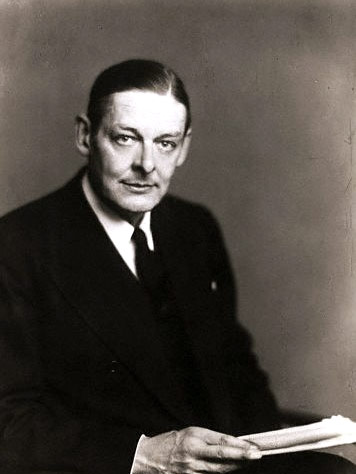
With noses lifted high in the air, we consider ourselves to have an utmost level of creativity, we are literary artists, we are English scholars, and we are pretentious at that. I give myself permission to write these things because I am an English major, and besides I will further justify those notions by saying that not long ago one of my English professors actually suggested that English majors are often rather pretentious. Maybe I am writing from an extreme vantage point, but anyway such was never meant to be my purpose for this entry. I want to consider our cynicism toward those in the sciences. To do so, allow us to consider the theory of relativity. You know the good old Einstein formula, E=mc2. We scoff at such when we consider it in relation to artistic creativity. Unlike the poem in my last entry, knowing the historical background of the formula, or knowing Einstein’s biographical information makes little difference in our interpretation of the formula. Interestingly, the formula was invented during the time of modernism around the same time as formalism. What am I trying to get at? I’m not sure (just kidding). You see, formalism was originally a modernist school of thinking so we can begin making connections. Originally it was the way of doing English Studies. In present day, we are trained to regard poems as vehicles of communication and often regard history above the poem itself. Formalism demands that we look at literature plainly, that we consider how the words create meaning. It is, in effect, anti-romantic, anti-scholastic, even Victorian. Living and writing during this time period, I think T.S Eliot was getting at some of these notions. He suggests, according to my understanding, that the poet be intentional about tradition. That he or she work not so much toward creating but obtaining a deliberative tradition as opposed to accepting an embedded tradition. This drawn from my own understanding and interpretation of T.S Eliot’s, Tradition and the Individual Talent. So is it fair to draw parallels between the sciences and the arts? In relation to history, I reply with a resounding yes!

Thursday, February 21, 2008

Innately Formalist- Logical Possibility?

The following poem (by following I mean posted below, for your conveience of course) was presented in literary criticism class today, and we were asked to do a free write about its meaning. Upon completion of this first task we paired with partners and shared that which we had written. Upon first reflection this poem honestly seems quite simplistic. I mentioned to my partner that this poem immediately reminded me of the Casting Crown’s Stained Glass Masquerade song. I had scribbled down thoughts regarding how so many Christians feel compelled to wear a mask, that they are surface level, ultimately that they lack integrity. This song also reminded me of those who might be defined as having inducement personalities, people pleasers, who often lack touch with reality, who fail in the realm of authenticity (ouch, I know I have potentially stepped on toes).

Our professor then interrupted our conversations and informed us that the poem was written by an African American, and asked us to consider whether having that information changed our understanding of the poem’s meaning. My partner immediately suggested that knowing that information certainly changed the poem’s meaning. I snickered and said while of course we can allow that to change the meaning if we want; after all we are English majors. However, I didn’t stop there. I decided to reject that which my field of study has trained me to do and instead suggested that we do not have to allow that knowledge to change our thinking, or understanding, of the poem.

Isn’t it interesting how we often assume things of writng based upon for instance historical or biographical information. In this example we want to pounce on the idea that this poem could be speaking of slavery, but I beg to differ. Surely, this is a possibility, and a rather logical one at that, but I would caution our assumption of such things when there is no clear evidence. Perhaps we are so deeply seeped in this way of thinking that it subjects in us an immediate desire to consider the biographical, intellectual, and historical backgrounds of those texts that we read, or perhaps I am just innately a formalist, though I am not sure if being innately formalist is a logical possibility.

We Wear the Mask- Paul Laurence Dunbar (1872-1906)

WE wear the mask that grins and lies,
It hides our cheeks and shades our eyes,—
This debt we pay to human guile;
With torn and bleeding hearts we smile,
And mouth with myriad subtleties.

Why should the world be over-wise,
In counting all our tears and sighs?
Nay, let them only see us, while
We wear the mask.

We smile, but, O great Christ, our cries
To thee from tortured souls arise.
We sing, but oh the clay is vile
Beneath our feet, and long the mile;
But let the world dream otherwise,
We wear the mask!

Stained Glass Masquerade- Casting Crowns

Is there anyone that fails
Is there anyone that falls
Am I the only one in church today feelin' so small

Cause when I take a look around
Everybody seems so strong
I know they'll soon discover
That I don't belong

So I tuck it all away, like everything's okay
If I make them all believe it, maybe I'll believe it too
So with a painted grin, I play the heart again
So everyone will see me the way that I see them

Are we happy plastic people
Under shiny plastic steeples
With walls around our weakness
And smiles to hide our pain
But if the invitation's open
To every heart that has been broken
Maybe then we close the curtain
On our stained glass masquerade

Is there anyone who's been there
Are there any hands to raise
Am I the only one who's traded
In the altar for a stage

The performance is convincing
And we know every line by heart
Only when no one is watching
Can we really fall apart

But would it set me free
If I dared to let you see
The truth behind the person
That you imagine me to be

Would your arms be open
Or would you walk away
Would the love of Jesus
Be enough to make you stay

Listen to the song I refer to: http://www.youtube.com/watch?v=aRUJrjUGGfg


Monday, February 18, 2008

Vocation & Books

Emerson on Vocation:

Emerson implicitly draws upon an all time favorite word among those of Messiah College namely, vocation. He writes about vocation, though never using the term, in relation to a distribution of functions. In the distribution of functions the scholar serves as the delegated intellect. Accordingly, “In the right state he is, Man Thinking. In the degenerate state, when the victim of society, he tends to become a mere thinker, or, still worse, the parrot of other men’s thinking.” I would suggest that here Emerson is writing about something that is relevant to present day. Often, the work of a scholar is looked down upon as if to suggest that scholars are those who lack any or all practical skills. This as if to say that the work of merely reading books is easy and true work demands physical labor. Though in observation such are the ideas of many who can barely stand the mental work of academia or lack the ability to even attempt scholarly work at any capacity. I have a bitter distaste for the extremes of both academic and practical work. I’m all about attempting to find a balance between the two, similar to my seeking a balance between orthodoxy and orthopraxy. Though this balance might appear to be in relation to completely different subjects, I would contend that they are really quite similar.

Emerson on Books:

“The theory of books is noble. The scholar of the first age received into him the word around; brooded thereon; gave it the new arrangement of his own mind, and uttered it again. It came into him, life; it went out from him, truth. It came him short-lived actions; it went out form him, immortal thoughts. It came to him business; it went from him, poetry. It was dead fact; now, it is quick thought. It can stand, and it can go. It now endures, it now flies, it now inspires. Precisely in proportion to the depth of mind from which it issued, so high does it soar, so long does it sing.”

Clearly, Emerson is skeptical about reading and perhaps about writing as well. Though it can be noted that essentially the writer is the one who brings meaning and life to recorded word. However, this statement makes me wonder how fact is misconstrued through the imagination of the poet writer. The writer takes from the old and creates the new, so how is the reader to sort fact from fiction? Though pity those who suggest that we should neither read nor write. Surely, that would defy learning from the past, and ultimately we would be far less advanced an all aspects of life and society. Books are something that we seldom think about in relation to any form of theory. Books as theory, the theory of books, are something we might want to consider.

Video Emerson- Check it!:
http://youtube.com/watch?v=Cas9bBd3cJU


Wednesday, February 13, 2008

Interrelationship: Culture & Perfection


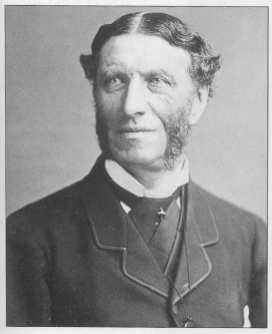
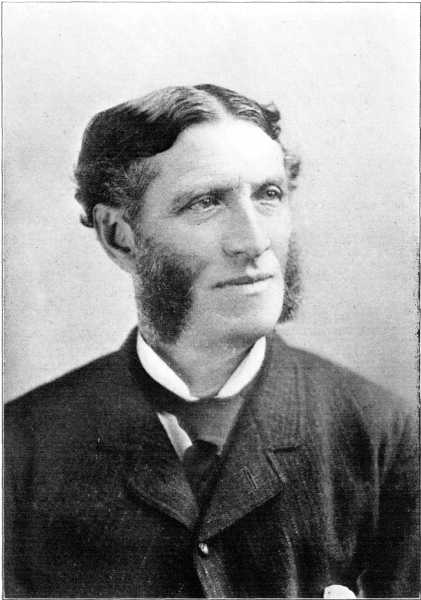
While I appreciate Matthew Arnold’s creation of the interrelationship between culture and perfection in, Culture and Anarchy, I find it difficult to follow how he arrives at such. How would he suggest we pursue total perfection, when we are a very different people, individuals? He suggests that we allow the will of God to prevail but sadly, the will of God is often misconstrued even by the best of finite minds. Still, I uphold Arnold’s call to see and learn truth in an effort to pursue both personal satisfaction and bring about culture. I wonder whether this might realistically be a logical impossibility. Arnold’s essay, provokes a lot of pertinent considerations, but in my mind, also leave a lot of questions.

Defense of Poetry, Higher Calling of Poet

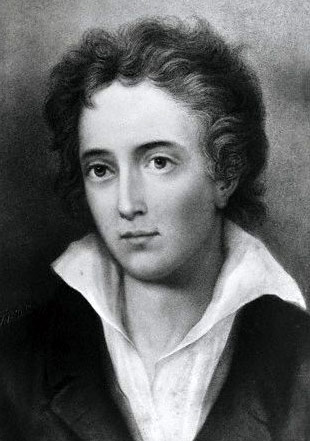
Recently, as I have reflected on my purpose as a writer I have thought at length about the task of using writing as a tool for upholding integrity. Viewed as such, I, as well as writers like me, have quite a high calling. Writing which serves to validate the poetry of all man-kind is that which Percy Bysshe Shelley suggests in A Defense of Poetry. That writing serves to validate the poetry of all humankind, emphasizing its infinite, and ultimate source. This flowing from transcendentalism would allude to the human imagination. As Shelly suggests poetry, “ever communicates all the pleasure which men are capable of receiving: it is ever still the light of life; the source of whatever of beautiful, or generous, or true can have place in an evil time.” The reading of poetry has the potential of making us more ethical persons as its poetical faculty is two-fold. It engenders in the mind a desire to reproduce and arrange according to rhythm and order and creates that which is good or beautiful. Writing as an ethical value system, something that I can’t say I had ever previously seriously considered.

Interesting background information to consider when reading A Defense of Poetry:

http://www.clayfox.com/ashessparks/reports/kate.html